Choose an industrial concrete floor degreaser by identifying the oil or grease and confirming whether the concrete is bare, sealed or coated. Stop the leak, absorb free oil, test a small area, use controlled agitation, recover all dirty liquid, rinse as directed and inspect the floor after it is fully dry.
An oily shop floor is more than an appearance problem. It can spread contamination on tires and footwear, interfere with maintenance work, and create a walking-surface hazard. But pouring a strong cleaner across the entire floor is rarely the best first move.
The right industrial concrete floor degreaser depends on what was spilled, how long it has been present, whether the concrete is bare or coated, and where the dirty water can legally go. A good process removes the soil without turning one contained patch into a much larger slick.
This guide is for maintenance shops, warehouses, fleet facilities, and industrial sites. Always follow the current product label, Safety Data Sheet, floor-coating guidance, equipment instructions, and site wastewater rules.
Fix the source before cleaning the stain
If oil is still dripping from a machine, hose, drum, or vehicle, stop or contain that source first. Place a compatible drip pan or absorbent where it can be managed safely. Block traffic from the affected area and mark the hazard.
OSHA requires walking-working surfaces to be kept clean and, to the extent feasible, dry. Its rule also calls for hazards such as leaks and spills to be corrected or guarded before employees use the surface again. Review OSHA 29 CFR 1910.22.
Do not begin with a hose. Water can carry oil into joints, under equipment, across travel lanes, or into a drain before the cleaning plan is ready.
Remove free oil before adding detergent
Use compatible absorbent pads, socks, reusable oil-only materials, or another facility-approved method to pick up free liquid. Scrape or sweep loose solids separately. These simple dry steps reduce the amount of chemical and water needed later.
Handle used absorbent according to what it collected. Material saturated with used oil, fuel, coolant, solvent, or an unknown liquid may have different storage and disposal requirements. Keep the waste labeled and contained while the site determines the correct route.
Know the floor you are actually cleaning
“Concrete floor” can mean porous bare concrete, dense machine-troweled concrete, an older sealer, epoxy, urethane, painted markings, repaired patches, or a worn mix of several finishes. Strong alkaline chemistry that is acceptable on one section may dull a coating, lift paint, or expose existing damage elsewhere.
Inspect an inconspicuous test area. Look for softening, discoloration, loss of gloss, tackiness, etching, and changes in traction after the surface is rinsed and dry. Check the coating manufacturer's cleaner limits when that information is available.
Match the degreaser to the soil
Fresh hydraulic oil, old petroleum grease, water-soluble coolant, tire marks, cutting fluid, and carbon-rich grime do not behave the same way. Tell the chemical supplier what the soil is, not simply that the floor is dirty.
Heavy-duty alkaline degreasers are commonly used for oily industrial soils because they can loosen grease and help the wash solution carry it away. Stronger is not automatically better. Excess concentration can increase worker exposure, residue, rinsing, coating risk, and the amount of chemical in the recovered water.
A useful supplier conversation covers:
- The oil, grease, coolant, or mixed soil involved
- Bare concrete versus a known coating or sealer
- How old and how thick the deposit is
- Manual scrubbing, autoscrubber, pressure washer, or another application method
- Water temperature and hardness
- The approved method for collecting and handling wash water
Use a small controlled test
Choose a representative patch that is not in the middle of an active aisle. Prepare the degreaser exactly as directed and record the concentration. Apply enough solution to wet the soil without flooding the floor, allow only the listed dwell time, and keep it from drying.
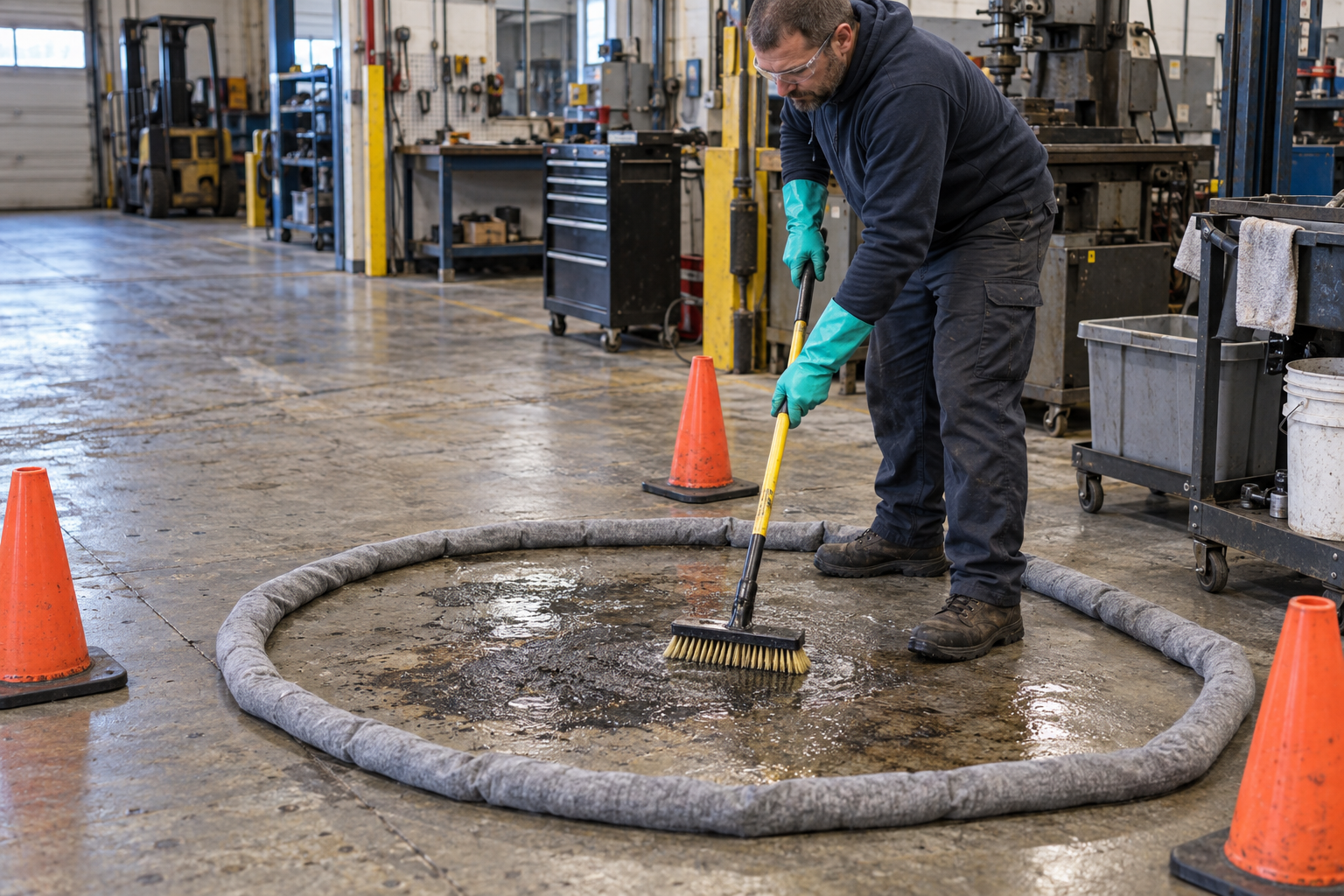
Agitation often matters more than another chemical addition. A suitable stiff brush or floor machine helps the solution reach low spots and pores. Use equipment compatible with the cleaner and the floor. Then recover the dirty liquid and rinse as the label directs.
Evaluate the area only after it dries. A wet floor can hide remaining oil and permanent discoloration. Use a clean absorbent pad or white wipe to check for transferable residue, and compare traction with the surrounding dry floor. A shadow may remain where oil penetrated deeply even when the removable surface film is gone.
A straightforward cleaning sequence
- Close the area. Control pedestrians, forklifts, and vehicles before introducing water or chemistry.
- Stop the leak. Repair, isolate, or capture the continuing source.
- Pick up bulk soil. Absorb free liquid and remove loose debris.
- Protect drains. Confirm the recovery plan and block unapproved flow paths.
- Test the cleaner. Verify compatibility and performance on a small representative patch.
- Work in sections. Apply, dwell, and agitate according to the label without letting solution dry.
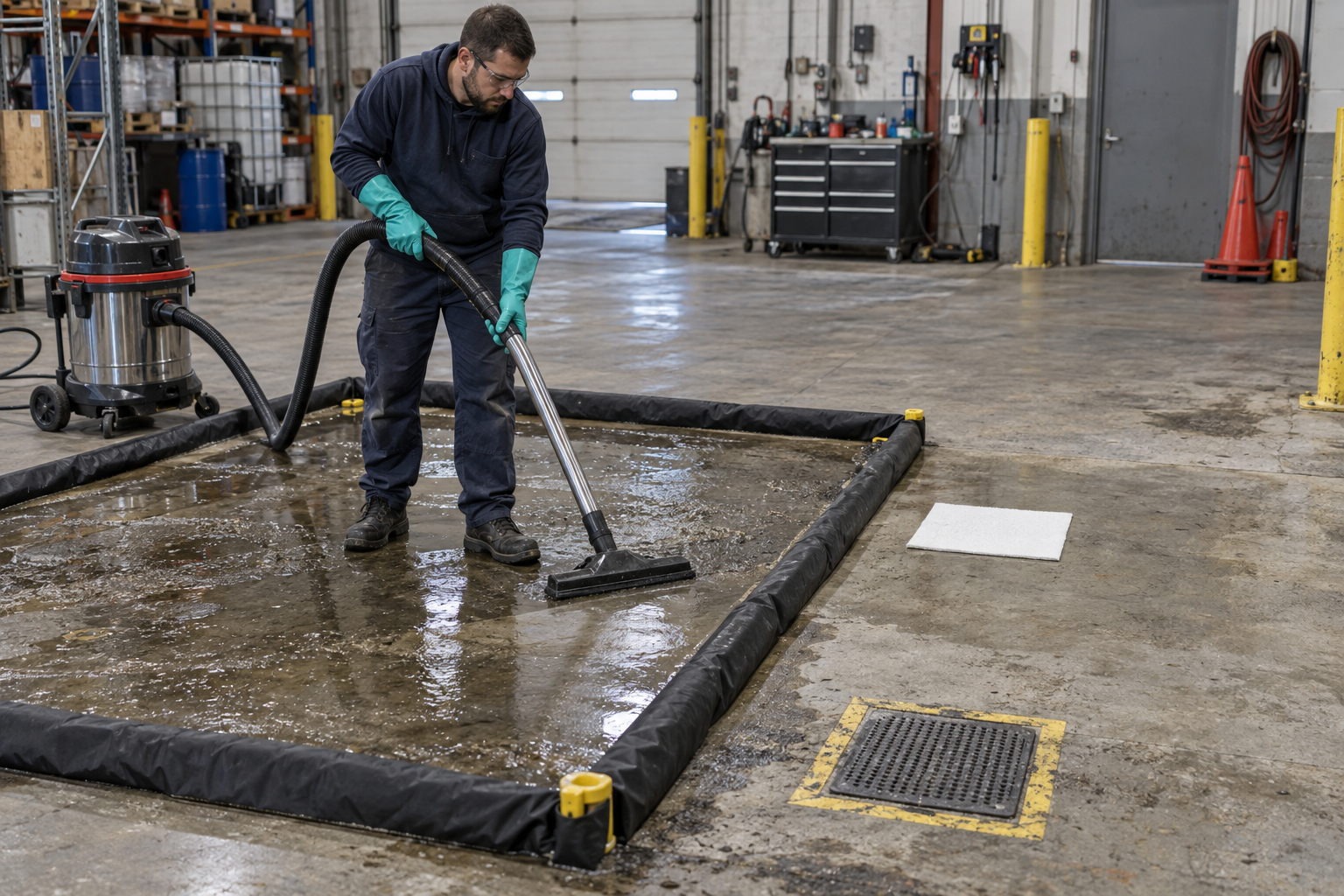
- Recover the liquid. Use a wet vacuum, scrubber recovery system, or another approved collection method.
- Rinse as directed. Keep the rinse contained and recover it too.
- Inspect dry. Check residue, traction, coatings, joints, and nearby surfaces before reopening.
Keep dirty water out of storm drains
Once detergent lifts oil from concrete, the contamination is in the wash water. It has not disappeared. The mixture may contain petroleum, metals, coolant, solids, and cleaning chemical.
EPA industrial stormwater guidance recommends performing cleaning in contained areas and collecting wash and rinse water for treatment, recycling, or another approved destination. It specifically warns against discharging wash water to storm drains or surface water. See EPA industrial stormwater practices.
Do not assume every indoor floor drain goes to a sanitary sewer or that sanitary discharge is automatically allowed. Trace the drain, confirm authorization with the facility and local sewer authority, and consider whether the detergent emulsifies oil. Stable emulsions can reduce the effectiveness of some oil-water separators.
Common reasons a floor still feels greasy
| What you notice | What to check |
|---|---|
| A uniform slippery film after drying | Too much detergent, incomplete recovery, or insufficient rinsing |
| Dark spots return after a few hours | Oil migrating from porous concrete or an active leak |
| Only tire lanes stay dirty | Traffic recontamination, rubber transfer, and cleaning frequency |
| The coating turns dull or tacky | Chemical, dwell, temperature, or mechanical incompatibility |
| One pass barely changes old buildup | Bulk soil removal, agitation, soil type, and realistic restoration limits |
Do not keep increasing concentration without identifying the failure. More chemical will not repair damaged concrete, stop a leak, replace agitation, or remove oil that has penetrated deeply below the surface.
Protect the cleaning crew
Review the SDS before opening the container. Select chemical-resistant gloves, eye and face protection, footwear, and protective clothing from the product hazards and the work method. Provide training, labeled containers, spill controls, and immediate flushing facilities where corrosive exposure is possible.
Wet cleaning creates its own slip zone. Keep hoses and cords out of travel paths, maintain drainage only to approved collection, and provide dry standing areas where feasible. Do not reopen the section until it is dry, inspected, and free of transferable residue.
Keystone Clean-X heavy-duty degreasers
Keystone Clean-X lists Turbo X 2, Clean-X 86, and Clean-X 4X4 in its Heavy-duty Degreaser category. The product guide identifies applications that include shop floors, equipment, grease, oil, and industrial grime. These are corrosive professional products, so the current SDS and supplier guidance are essential.
Contact Keystone Clean-X with photographs, the known soil, floor or coating type, cleaning equipment, water conditions, recovery plan, and required result. That is enough information to start a useful recommendation without guessing at dilution.
Sources and further reading
Frequently asked questions
What is the best degreaser for an industrial concrete floor?
The best choice matches the actual oil or grease, floor coating, cleaning equipment and wastewater plan. Heavy-duty alkaline degreasers are common for oily soils, but compatibility and a controlled test matter more than maximum strength.
Should oil be absorbed before degreasing concrete?
Yes. Stop the source and pick up free liquid first. Dry recovery reduces the amount of cleaner, water and contaminated wastewater needed for the remaining film.
Can a pressure washer remove oil from a shop floor?
Pressure may provide useful agitation on a compatible surface, but it can also spread oily water and drive contamination into unprotected areas. Use it only with containment, recovery and an approved wastewater plan.
Why does a concrete floor still look stained after degreasing?
Oil can penetrate porous concrete and leave discoloration after transferable surface residue is removed. Judge the result after drying with a clean wipe and traction check rather than appearance alone.
Can oily floor wash water go down a drain?
Do not assume it can. Identify where the drain leads and obtain approval from the facility and local authority. Oily detergent wash water must not enter a storm drain or surface water.