Choose commercial dishwasher detergent by matching it to the machine type, water hardness, food soil, ware materials and dispensing system. Verify wash and sanitizing controls separately, calibrate detergent feed, maintain spray arms and screens, and troubleshoot spots or film before increasing chemical.
When plates leave a commercial dishwasher with grease, spots, film, or stuck-on food, detergent is an obvious suspect. It is not always the cause. Water hardness, wash temperature, spray-arm condition, dosing, scraping, rack loading, rinse performance, and sanitizer control all affect the result.
The right commercial dishwasher detergent must match the machine, local water, food soil, wares, and chemical feed system. A product that performs well in one hotel dish room may disappoint in a restaurant using different water, temperatures, cycle times, and soils.
This guide explains what to compare before changing products and how to troubleshoot without wasting chemical. Follow the machine data plate, manufacturer instructions, current product label and Safety Data Sheet, and the food code adopted by the local regulatory authority.
What does commercial dishwasher detergent do?
Machine dish detergent helps wet surfaces, loosen food soil, break up fats and proteins, suspend removed material, and manage minerals so soil can be carried away during the wash. Professional formulas are designed for the high temperature, short cycle, strong spray action, and automated feed used in commercial warewashing.
Hand dish soap is not a substitute. Its high foam can interfere with pumps and spray action, overflow the machine, and leave difficult residue. Only use a detergent specifically approved for the commercial dishwasher and application.
Detergent also is not automatically a sanitizer or rinse aid. Each product has a separate job:
- Detergent removes food and grease during the wash.
- Rinse aid changes how water drains from wares and can improve drying and spotting.
- Sanitizer provides the required sanitizing step in a properly designed chemical-sanitizing machine.
- Delimer removes mineral scale from compatible machine surfaces during a separate maintenance process.
A chlorinated detergent should not be treated as a sanitizer unless its label and the approved warewashing program specifically establish that use.
Start with the dishwasher type
Commercial machines include undercounter, door-type or stationary-rack, conveyor, flight-type, glasswasher, and pot-and-pan systems. They may sanitize with hot water or with a chemical process. Those differences change wash conditions, chemical feed, rinse behavior, throughput, and maintenance needs.
Read the machine data plate and manual before selecting detergent. The FDA Food Code explains that the data plate provides vital operating details such as required cycle times and temperatures. FDA publishes the Food Code as a model; states and local authorities adopt and amend editions on their own schedules. Check the current FDA Food Code resources, then confirm the rule in the actual jurisdiction.
A chemical supplier should know the machine make and model, whether it is high-temperature or chemical-sanitizing, rack volume, wash-tank capacity, incoming water conditions, and existing feed equipment before recommending a program.
How hard water affects commercial dishwashing
Hard water contains calcium and magnesium that can consume cleaning capacity, leave spots or film, and build scale on heaters, nozzles, tank surfaces, and probes. The harder the water, the more important water treatment, detergent formulation, accurate feed, rinse control, and planned deliming become.
Do not diagnose hardness from one spotted glass. Test the incoming water and, where appropriate, softened water at the machine. Record hardness in a consistent unit and tell the chemical supplier. Also check whether the softener has salt, is bypassed, or regenerates at the wrong time.
Soft water creates its own dosing considerations. A setting developed for harder water may be excessive after a softener is repaired. Review detergent and rinse-aid feed whenever water treatment changes.
Match the formula to the soil and wares
A breakfast operation with egg and oatmeal, a banquet kitchen with baked starch, and a bar washing lipstick-marked glassware do not present the same soil. Note the difficult items, menu, holding time before washing, and whether food dries onto the ware.
Also identify everything being washed: glazed china, glass, stainless flatware, aluminum sheet pans, plastics, decorated ware, nonstick surfaces, and specialty metals. Highly alkaline or chlorinated chemistry may not be suitable for every material. Confirm compatibility with both the detergent supplier and ware manufacturer.
Pre-scraping matters. Remove food and empty liquids before racking, but avoid unnecessary pre-rinsing that wastes water. Soak only with an approved product and procedure. Detergent cannot reliably compensate for overloaded racks, nested utensils, blocked spray, or heavily dried soil.
Why detergent dosing must be measured
Too little machine dish detergent can leave grease, food soil, and redeposited film. Too much can increase residue, foam, chemical consumption, corrosion risk, and rinse demand. Visual guesswork is unreliable because a clean-looking wash tank may still be out of control.
Use the detergent manufacturer's approved verification method and have the feed system calibrated for the machine. Check pickup tubes, squeeze tubes, probes, pumps, wiring, injection points, and empty-container alarms. Record product use against racks or covers served so a sudden change becomes visible.
Never hand-pour concentrated detergent into the wash tank unless the product and machine instructions explicitly require that procedure. Automated dispensing reduces direct contact and makes results more consistent.
Commercial dishwasher detergent troubleshooting
| Problem | Check before changing detergent |
|---|---|
| Greasy plates | Scraping, wash temperature, detergent feed, clogged spray arms, tank soil load, cycle time and overloaded racks |
| White spots on glasses | Water hardness, rinse-aid feed, final-rinse pattern, drying, scale and excessive detergent |
| Cloudy film that wipes off | Detergent or mineral residue, rinse performance, rack spacing and chemical concentration |
| Cloudiness that does not wipe off | Glass etching or permanent wear; review chemistry, temperature and replacement expectations |
| Food particles on clean ware | Dirty wash water, clogged screens, spray blockage, poor pre-scraping and redeposition |
| Wares stay wet | Rinse aid, final-rinse temperature, rack unloading time, ventilation and plastic content |
| Sudden foam | Hand soap, presoak or other high-foam contamination entering the machine |
High-temperature versus low-temperature machines
High-temperature machines rely on specified hot-water conditions for sanitization. Low-temperature or chemical-sanitizing machines use an approved sanitizer at controlled concentration, temperature, and contact conditions. “Low temperature” does not mean temperature is unimportant; the machine and chemical program still have operating limits.
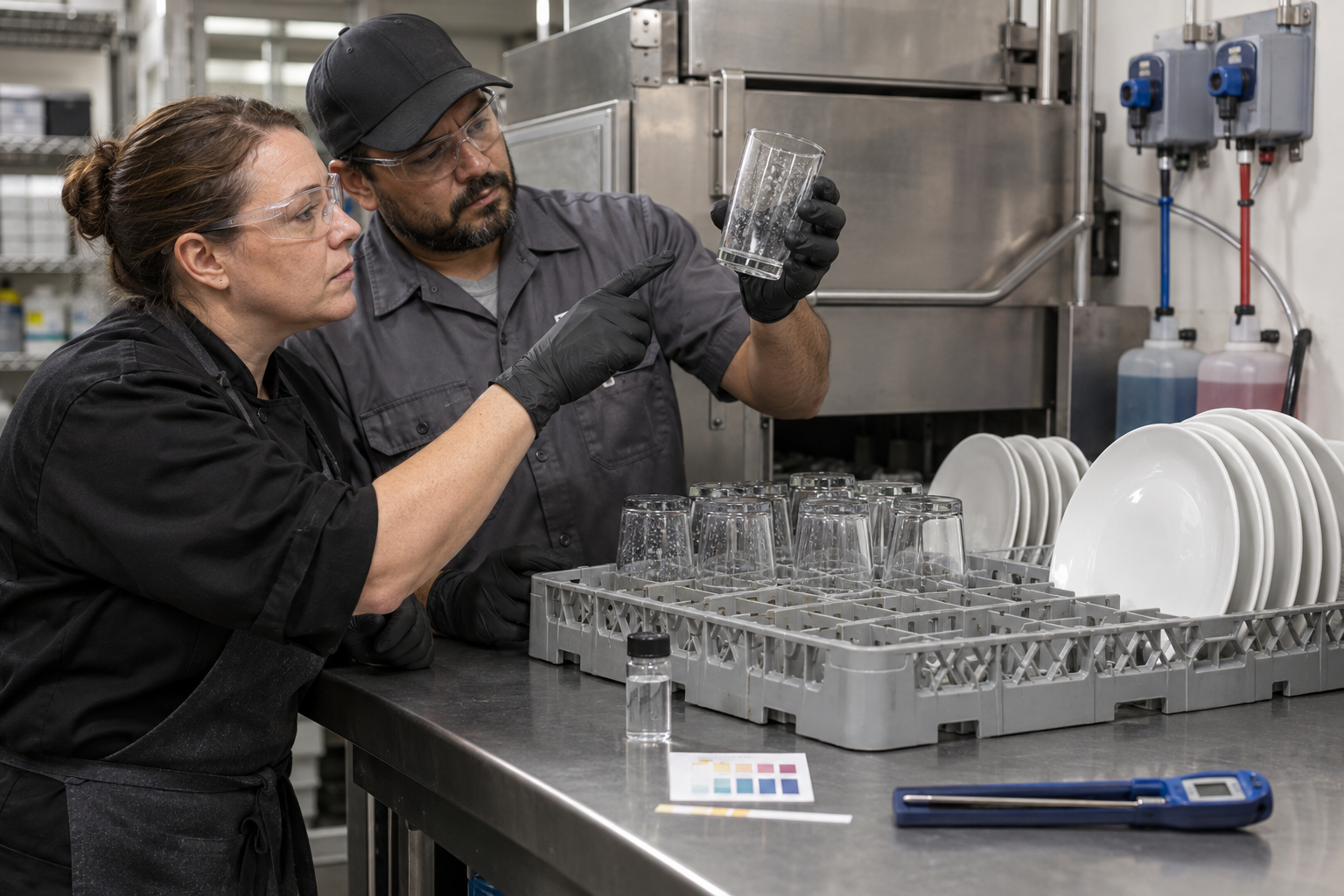
Do not copy a temperature from another kitchen. Verify the machine data plate, manufacturer requirements, and locally adopted code. Use the required thermometer, temperature labels, or sanitizer test method to document the result. Detergent strength cannot correct a sanitizing failure.
ENERGY STAR notes that commercial dishwashers use hot water, soap, rinse chemicals, water, and energy, and it distinguishes machine categories by both design and sanitizing approach. Review ENERGY STAR commercial dishwasher guidance.
Set up a daily warewashing check
A short opening and shift-change check prevents many “bad detergent” calls:
- Confirm the machine is assembled, clean, and free of yesterday's debris.
- Check screens, scrap trays, curtains, spray arms, jets, and drains.
- Verify chemical containers, pickup tubes, pumps, and alarms.
- Run the machine to its required operating condition.
- Measure wash and sanitizing controls with approved tools.
- Inspect representative plates, glasses, flatware, and difficult wares after drying.
- Record results, corrective action, and chemical changes.
Change the tank water at the frequency required by the machine and soil load. A heavily contaminated tank recirculates food and grease, forcing the detergent to work against an avoidable burden.
Protect employees from machine dish chemicals
Commercial dish detergents can be strongly alkaline, corrosive, or otherwise hazardous. OSHA requires employers to communicate chemical hazards through labels, Safety Data Sheets, training, and protective measures. See OSHA food-service chemical guidance.
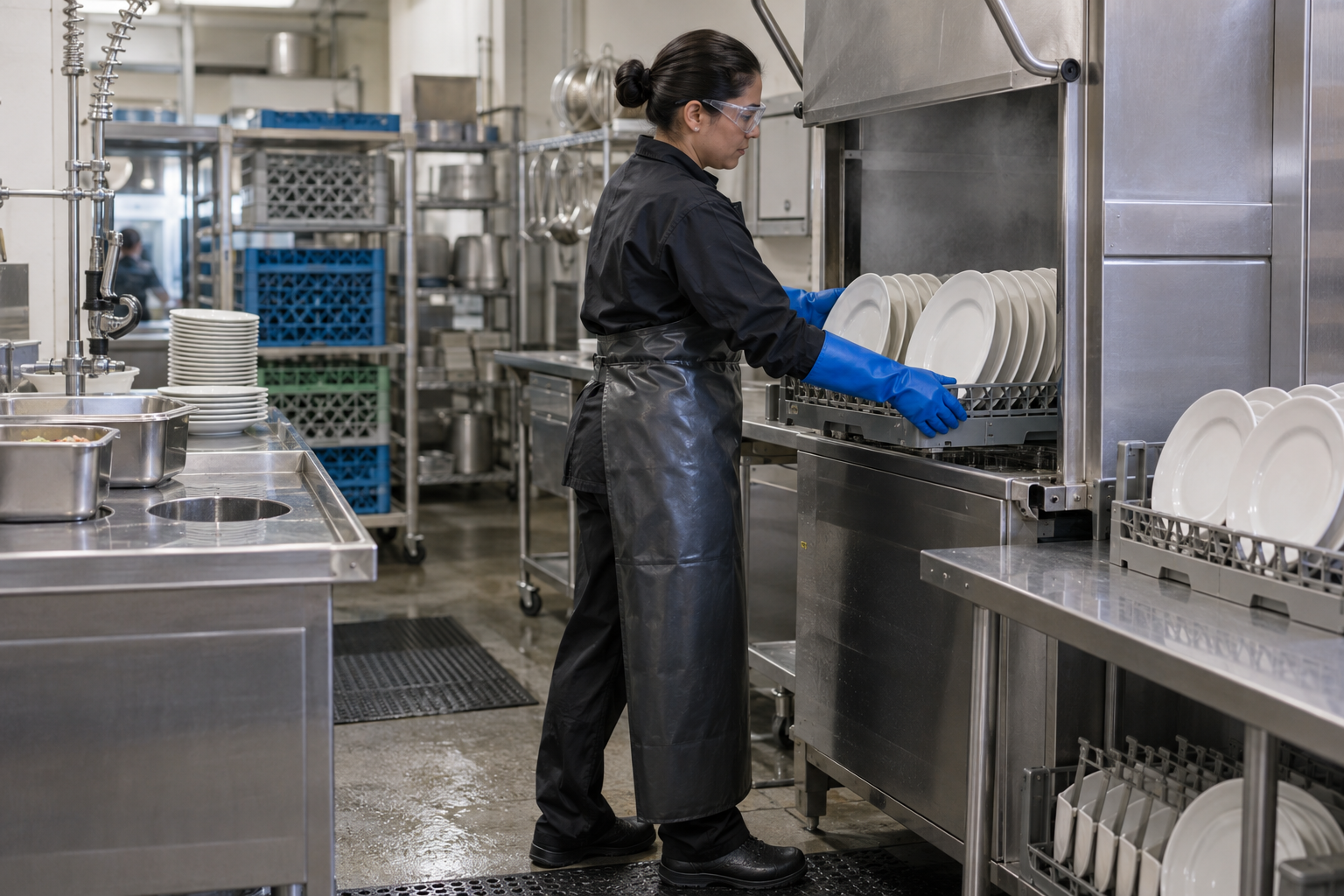
Keep concentrate in its original labeled container and use closed dispensing where designed. Train workers not to swap chemical lines, defeat alarms, or reuse beverage containers for chemicals. Select gloves and eye or face protection from the SDS and task assessment, especially when changing containers or servicing feed equipment.
Never mix detergent, delimer, sanitizer, bleach, ammonia, or drain cleaner. Isolate and rinse equipment according to written service procedures before changing incompatible products.
Compare cost per clean rack
Price per container does not show the real cost of a warewashing program. Track detergent and rinse-aid use, water, energy, rewashes, breakage, machine service, scale removal, labor, and rejected tableware. A controlled program that produces clean wares on the first pass is usually more economical than a cheaper product that requires rewash or causes scale and service calls.
When testing a new detergent, use representative soils and run the trial long enough to observe tank loading and normal meal periods. Keep water treatment and machine settings stable so the comparison means something.
Keystone Clean-X Machine Dish Detergent
Keystone Clean-X Machine Dish Detergent is listed in the Dishwash Liquid category for automatic commercial dishwashing equipment. The SDS-based catalog identifies it as a chlorinated caustic detergent and warns that it may be corrosive to metals, harmful if swallowed, and capable of causing severe skin burns and eye damage.
Review the current Machine Dish Detergent Safety Data Sheet before handling or use. For product-selection guidance, contact Keystone Clean-X with the machine make and model, high- or low-temperature operation, water-hardness test, ware materials, food soils, daily rack volume, feed equipment, and the exact problem being corrected.
Sources and further reading
Frequently asked questions
What detergent should I use in a commercial dishwasher?
Use a low-foam machine dish detergent approved for the specific commercial dishwasher, water hardness, food soil, ware materials and dispensing system. Hand dish soap is not suitable.
How much commercial dishwasher detergent should I use?
Use the product and machine manufacturer's starting setting, then verify concentration with the approved test or calibrated dispenser. A universal amount is unreliable because machines, water and soil loads differ.
Why are glasses cloudy after commercial dishwashing?
Cloudiness may come from mineral film, detergent residue, poor rinsing or permanent glass etching. Check whether the film wipes off, then review water hardness, dosing, rinse aid, temperatures and spray condition.
Does hard water require more dishwasher detergent?
Hard water can reduce cleaning performance and increase spotting and scale, but simply adding more detergent may create residue. Test the water and adjust treatment, detergent and rinse settings as one controlled program.
Is commercial dishwasher detergent the same as sanitizer?
No. Detergent removes soil during washing. Sanitizer provides the approved sanitizing step in a chemical-sanitizing machine. A chlorinated detergent is not automatically a sanitizer unless its label and approved program establish that use.