
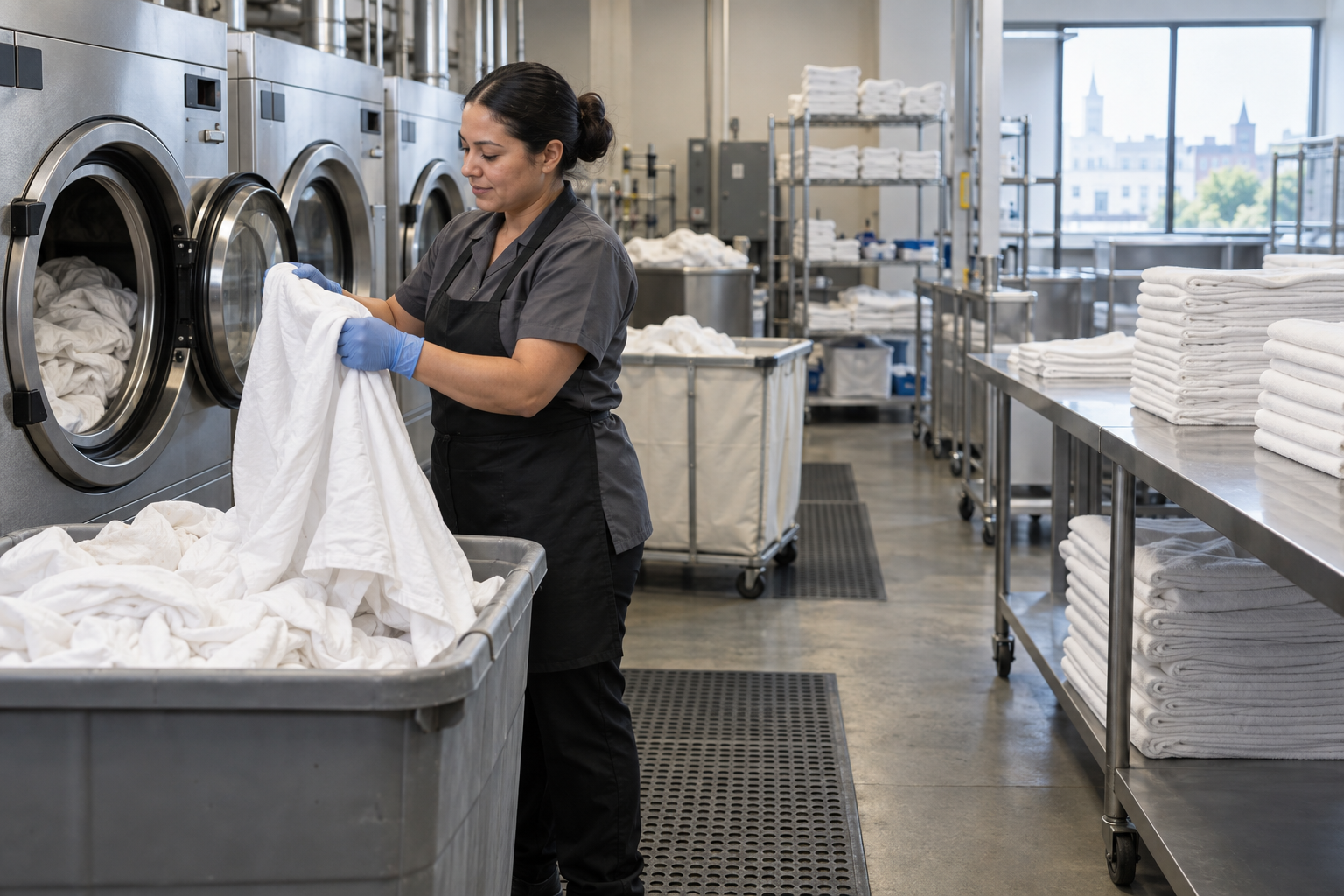
Choose commercial laundry detergent for hotels by matching it to linen type, soil, measured dry load, washer, water hardness, temperature and dispensing equipment. Calibrate feed, keep separate formulas for important loads, inspect finished linen and track rewash before changing chemistry.
Fresh, comfortable linen is part of the guest experience, but a hotel laundry handles more than white sheets. Towels collect body oils and cosmetics, kitchen textiles carry food grease, and spa linen may hold lotions that resist a basic wash. Treating every load the same often leads to gray fabric, lingering odor, rough towels, or unnecessary rewash.
The right commercial laundry detergent for hotels must fit the textile, soil, washer, water, temperature, and dispensing system. It should be evaluated as part of a complete wash formula—not chosen by scent or container price alone.
Start by separating linen and soil
Sort before the washer. Separate whites from colors, delicate items from durable cotton, and lightly used guest linen from greasy kitchen or heavily soiled maintenance textiles. Follow the textile care label and the hotel's handling procedure. Do not use the same chemistry on every fabric just because the loads look similar.
Keep soiled and clean linen flows apart. Carts, tables, hands, and tools that handle incoming laundry should not recontaminate folded linen. Remove foreign objects and identify stains before loading; heat from the dryer can make some untreated stains harder to remove.
Know the real washer load
Record the washer's rated dry-weight capacity, then establish practical loads for sheets, towels, and mixed pieces. Overloading prevents adequate movement, wetting, rinsing, and soil removal. Chronic underloading wastes water, energy, labor, and chemical and may increase mechanical wear on the linen.
Do not estimate every load by how full the drum looks. A cart of bulky sheets and the same cart filled with dense towels can have very different weights. A simple scale and written load standard make detergent use and quality results easier to compare.
Test the water before changing detergent
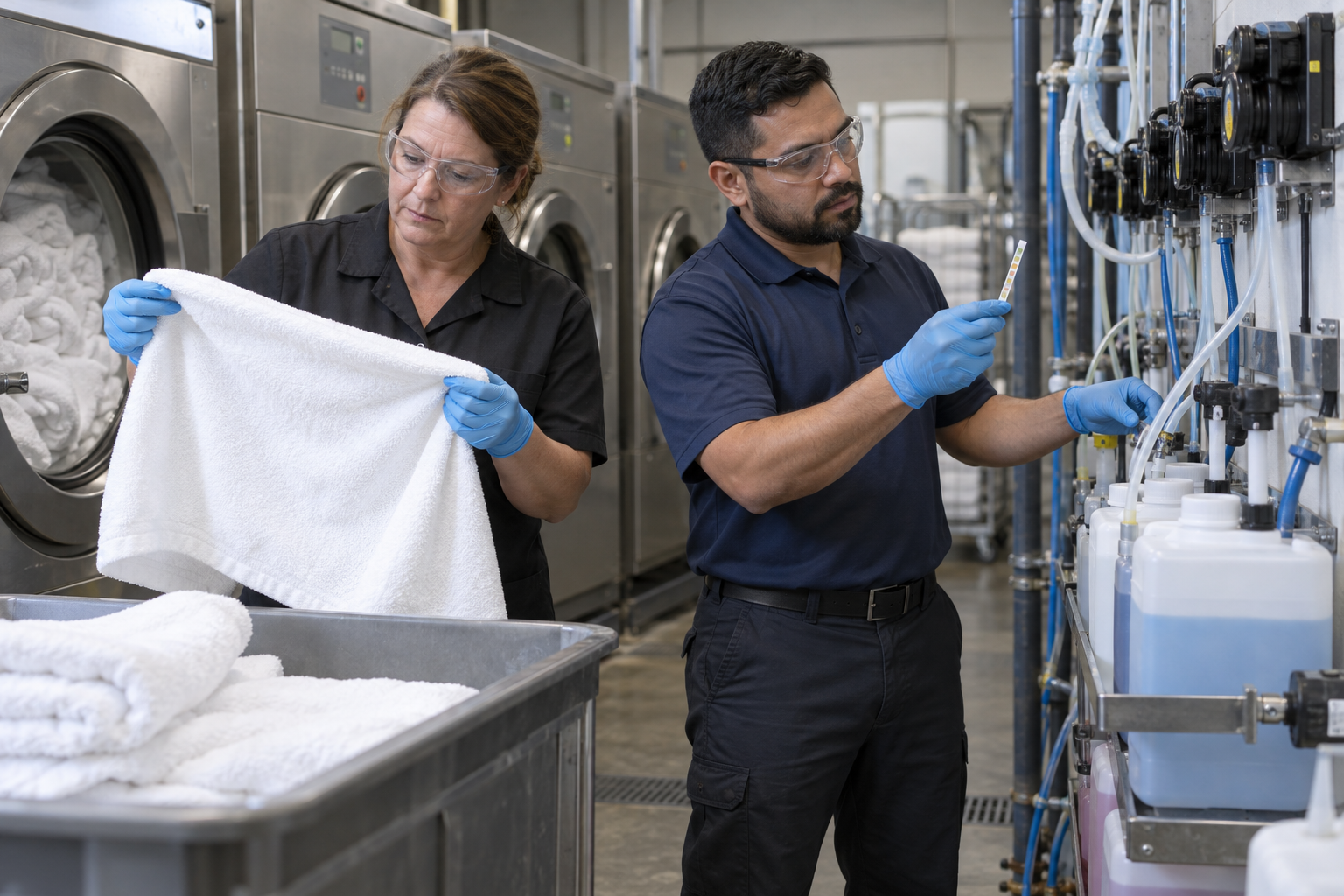
Water hardness can consume cleaning capacity, contribute to mineral buildup, and leave linen looking dull or feeling stiff. Test the water reaching the washers—not only a sample from elsewhere in the building. If a softener is installed, check its output and regeneration schedule as well.
Also note water temperature and any sudden changes in supply. The wash temperature must suit the fabric, soil, equipment, chemical program, and applicable facility procedure. A hotter cycle is not automatically a better cycle.
Build one formula for each important load
A laundry formula is the sequence of fills, chemical additions, wash steps, drains, rinses, extraction, and drying used for a defined load. Detergent is only one part. Depending on the operation, a supplier may specify separate alkali, bleach, sour or neutralizer, and softener steps.
- Detergent wets fabric, loosens soil, and helps keep removed material suspended.
- Alkali may support removal of oily soil in a controlled formula.
- Bleach addresses compatible stains and textiles under its labeled conditions.
- Sour or neutralizer may correct final linen pH and mineral residue.
- Softener changes hand and static but can reduce absorbency when overused.
These are different products with different hazards. Never mix concentrates or improvise combinations. Follow current labels, Safety Data Sheets, equipment instructions, and the chemical supplier's written program.
Calibrate liquid detergent dispensing
Automated liquid feed can make a hotel laundry more consistent, but only when the pump delivers the intended amount. Check pickup tubes, injection points, squeeze tubes, container levels, alarms, and programming. Replace worn components and confirm actual delivery after service.
Too little detergent can leave oily soil and encourage redeposition. Too much can increase residue, rinse demand, textile wear, and cost. There is no responsible universal dose: start with the product guidance, then have the formula set for measured load weight, water conditions, and soil.
Use finished linen to diagnose the process
| Result | What to check |
|---|---|
| Gray or dull whites | Sorting, water hardness, load size, soil redeposition, detergent delivery, rinsing, and accumulated mineral residue |
| Greasy towels | Cosmetic or food-oil load, wash formula, temperature limits, detergent and alkali feed, and overloading |
| Rough or stiff linen | Hardness, incomplete rinsing, detergent or alkali residue, neutralization, overdrying, and softener use |
| Yellowing | Oil buildup, incompatible bleach use, iron in water, excessive heat, or poor rinsing |
| Odor after drying | Washer cleanliness, incomplete soil removal, long damp holding time, incomplete drying, or clean-storage conditions |
| Rewash rate rising | Recent changes in linen mix, load weight, water treatment, feed equipment, employee procedure, or chemical supply |
Change one controlled variable at a time and record the result. If detergent, temperature, loading, and dry time all change together, the team cannot tell what solved—or caused—the problem.
Measure cost per usable pound, not per gallon
A lower-priced drum is not a saving if it raises rewash, stain-treatment labor, water use, dryer time, or early linen replacement. Track chemical consumption against pounds washed, then add rewash percentage and rejected pieces. The useful number is the cost of clean, guest-ready linen produced on the first pass.
Efficient equipment also matters. ENERGY STAR reports that certified commercial clothes washers use less energy and water than standard models. Extraction performance can reduce the moisture sent to the dryer, where time and energy costs continue. Review ENERGY STAR commercial washer guidance.
Protect employees around laundry chemicals
Concentrated laundry products can irritate or burn skin and eyes. OSHA highlights risks from splashes, unlabeled containers, and direct contact with detergents and other laundry chemicals. Maintain labels and Safety Data Sheets, train employees, and select gloves and eye or face protection for the actual task. See OSHA laundry chemical guidance.
Use closed dispensing where designed. Do not hand-pour concentrate into a machine unless the current product and equipment instructions explicitly require it. Provide a written response for leaks, empty containers, crossed feed lines, and employee exposure.
Keystone Clean-X Liquid Laundry Detergent
Keystone Clean-X Liquid Laundry Detergent is listed for commercial washing of fabrics and linens in the Laundry Products category. Review the current Liquid Laundry Detergent Safety Data Sheet before use; the catalog warns that the concentrate causes skin irritation and serious eye damage.
For a useful product recommendation, contact Keystone Clean-X with the washer type and capacity, linen categories, average dry load weight, water-hardness result, difficult soils, current feed equipment, and rewash problem. Keystone serves commercial customers across Pennsylvania, New Jersey, Delaware, New York, Connecticut, and Maryland.
Sources and further reading
Frequently asked questions
What is the best commercial laundry detergent for hotels?
The best choice fits the hotel's linen fibers, main soils, washer type, measured load weight, water hardness and automated feed system. A controlled trial and first-pass rewash data are more useful than scent or price per gallon.
How much laundry detergent should a hotel use?
There is no universal amount. Start with current product guidance and have the dispenser calibrated for dry load weight, water conditions, soil and washer capacity. Verify actual delivery rather than relying only on a pump setting.
Why do hotel towels feel rough after washing?
Common causes include hard-water minerals, incomplete rinsing, detergent or alkali residue, incorrect neutralization, overdrying and excessive or unsuitable softener. Test the water and review the complete formula before adding more product.
Why are white hotel linens turning gray?
Gray linen can result from poor sorting, overloaded washers, insufficient detergent delivery, hard water, redeposited soil or weak rinsing. Check each process variable and change one at a time.
Can hotels wash sheets and kitchen towels together?
They generally should be sorted by textile, color and soil. Greasy kitchen textiles can require a different formula from guest sheets, and mixing them may transfer soil or force unnecessarily aggressive treatment of lighter loads.