
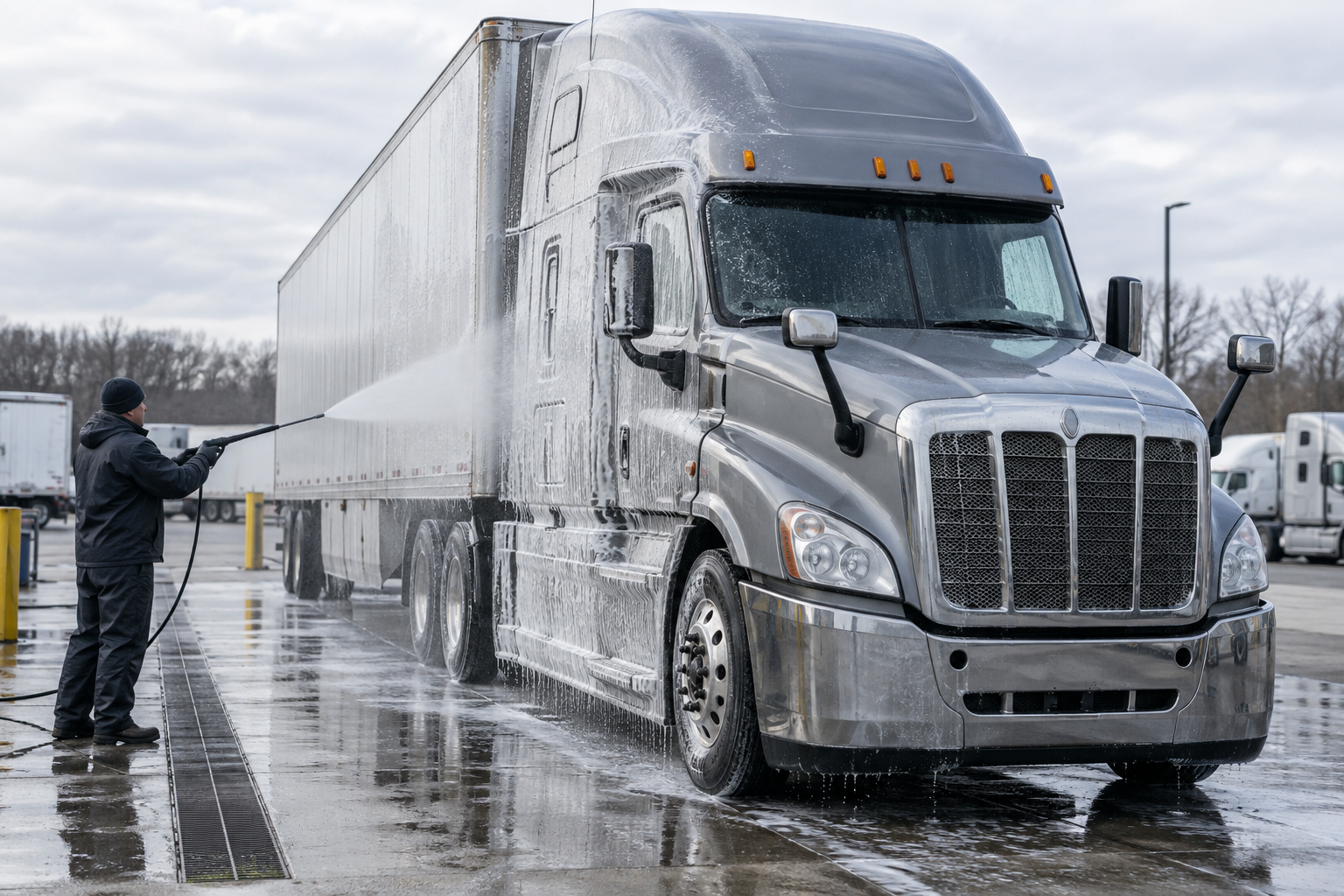
A two-step truck wash applies a compatible low-pH pre-soak followed by a high-pH detergent, then a complete pressure rinse. The sequence targets different parts of bonded road film and can reduce brushing when the chemistry, surface, water, equipment, and dwell time are properly controlled.
Road film is not one kind of dirt. A tractor-trailer moving through New Jersey, Pennsylvania, New York, Delaware, Maryland, or Connecticut can collect diesel residue, oily soil, fine mineral dust, deicing material, and ordinary traffic grime in the same trip. High-pressure water can remove loose material, but it often leaves a gray or brown film attached to painted panels, aluminum, wheels, and lower bodywork.
A two-step truck wash addresses that mixed soil with two compatible chemical stages. The first is a low-pH pre-soak. The second is a high-pH detergent. When the products, equipment, surface, water, and technique are properly matched, the sequence loosens road film so it can be rinsed away with less brushing. It is a process, not simply two soaps applied one after another.
This guide explains the operating principles fleet managers and professional washers should understand before selecting a system. Product labels, Safety Data Sheets, equipment instructions, site rules, and supplier guidance always take priority over general advice.
What is a two-step truck wash?
A two-step truck wash is a sequential cleaning method that uses a low-pH first step and a high-pH second step before the final pressure rinse. The two stages work on different parts of the bonded soil layer. The goal is to release road film across a large vehicle while reducing the amount of manual brushing needed.
The first step is commonly an acidic pre-soak selected for mineral deposits, oxidation, and the positively charged portion of road film. The second step is an alkaline detergent selected for oils, grease, organic soil, and the negatively charged portion of the film. The rapid pH change also helps disturb the bond between the soil and the vehicle surface.
That does not mean every acid and every alkaline cleaner can be paired. A working system depends on chemical compatibility, surface compatibility, controlled concentration, correct application equipment, adequate dwell time, and a complete rinse. Use products specifically intended to work together, and follow the current label and SDS for each one.
Why road film remains after a one-step wash
Loose mud is easy to see and relatively easy to remove. Road film is harder because it forms a thin, bonded layer. It may contain petroleum residue, carbon, tire wear, minerals, salt, and organic matter. The mix changes with the route, season, vehicle duty, and how long the soil has remained on the surface.
A single detergent may remove one part of that mixture while leaving another behind. Increasing pressure is not always the answer. Excessive pressure can force water into seals, damage decals, or create inconsistent results around rivets and trim. Two-step chemistry aims to loosen the mixed film before the rinse does the mechanical work.
A practical two-step workflow
1. Inspect the vehicle and identify sensitive surfaces
Before mixing or spraying anything, note polished aluminum, uncoated metals, damaged paint, decals, lighting, exposed electrical components, and recently repaired areas. Confirm whether the selected chemistry is approved for every surface it may contact. When compatibility is uncertain, stop and ask the chemical supplier. A small test in an inconspicuous area is more useful than assuming every trailer finish will respond the same way.
2. Check the wash area, equipment, and safety controls
Confirm that the wash pad can contain and direct the wastewater to an approved destination. Inspect injectors, proportioners, hoses, nozzles, and pressure-wash equipment before starting. Employees need access to the current SDS, correctly labeled containers, and the protective equipment specified by the product manufacturer.
The Occupational Safety and Health Administration requires employers to communicate workplace chemical hazards through labels, Safety Data Sheets, training, and a written hazard communication program. The SDS should inform handling, storage, first aid, spill response, and personal protection decisions. Review OSHA's Hazard Communication Standard.
3. Prepare only the concentration the job requires
More concentrate does not automatically produce a cleaner truck. Over-strong solution can increase surface risk, waste chemical, make rinsing harder, and raise the load in the wastewater. Under-strength solution may not release the film. Use the product label, supplier recommendation, water conditions, application method, and actual soil load to set the mixture. Never combine concentrates in a container unless the manufacturer's written directions specifically call for it.
4. Apply the first step evenly
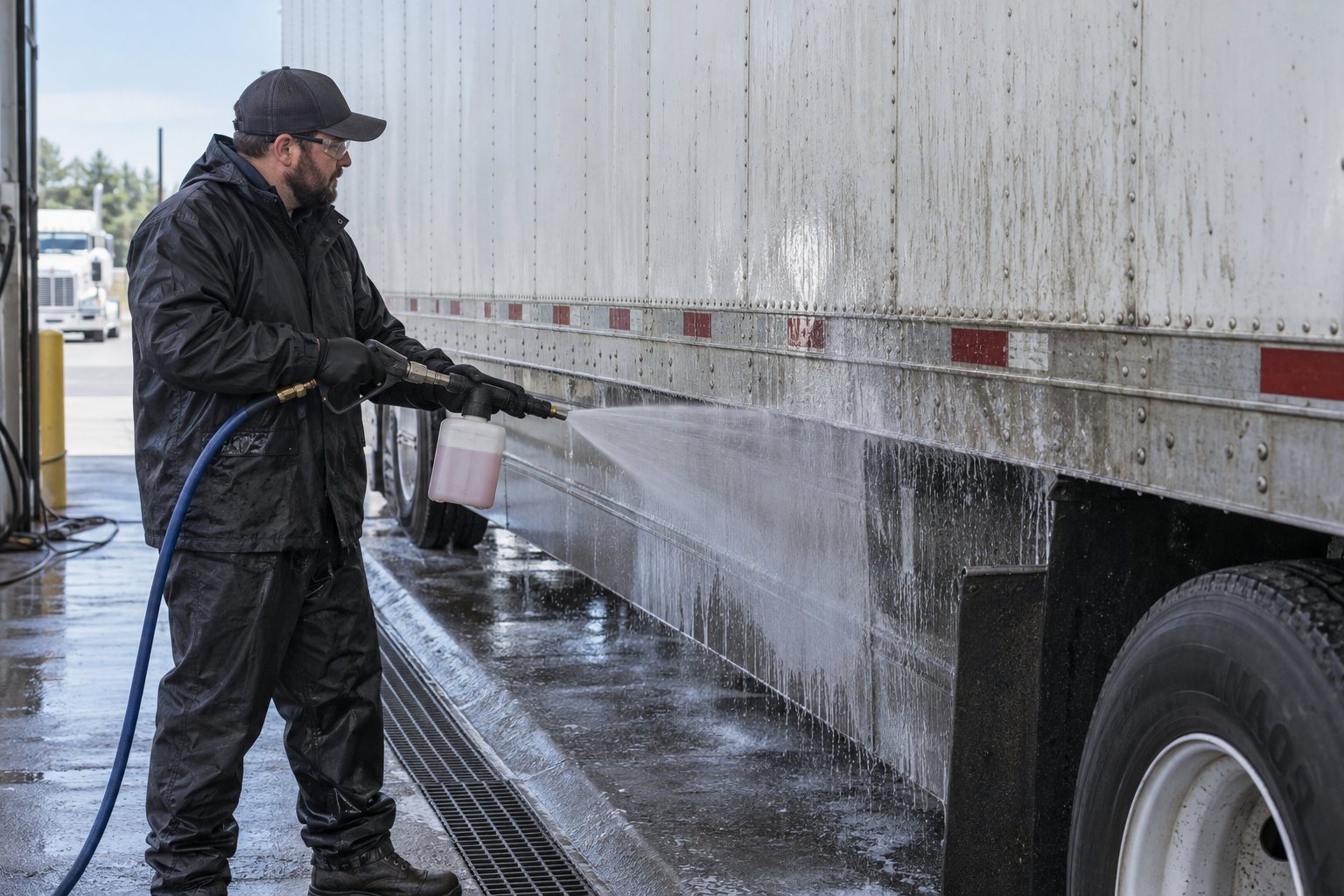
Many professional operators apply the first step from the bottom upward. That technique makes coverage easier to see and helps reduce streaks caused by concentrated runoff passing over dry panels. Work on a section small enough to keep wet and controlled. Respect the label's dwell guidance and do not allow the product to dry.
5. Apply the second step as the system directs
The high-pH second step follows the low-pH pre-soak. Some two-step systems are designed for the second chemical to be applied before an intermediate rinse; other systems may specify a different sequence. Follow the written instructions for the paired products rather than transferring a method from another brand or formulation.
6. Rinse completely from the top downward
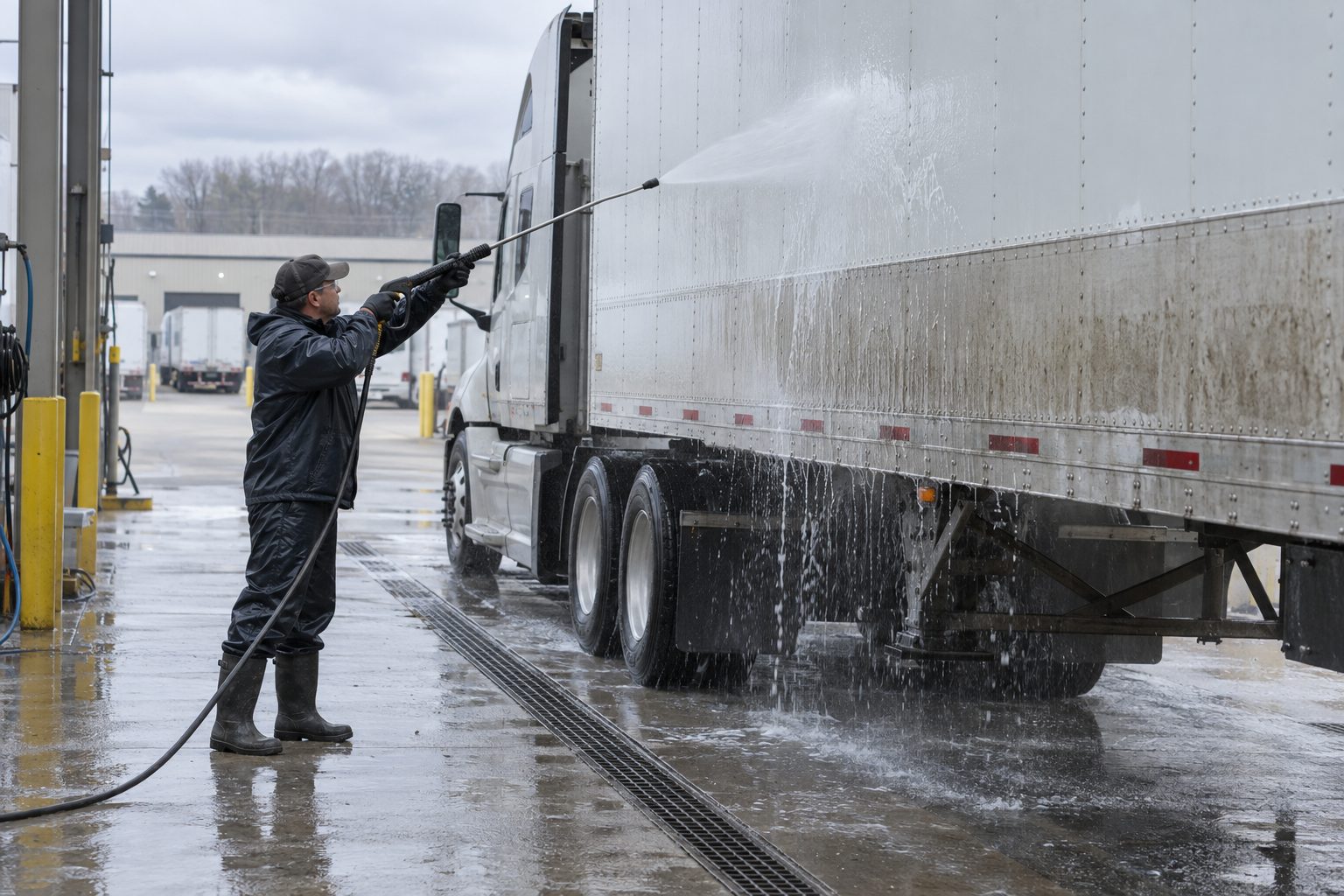
Use the final rinse to carry released soil and remaining solution off the vehicle. Start high and work downward with deliberate, overlapping passes. Give extra attention to seams, rivets, underbody areas, wheels, and places where solution can collect. The job is not finished while chemical residue remains on the surface.
7. Inspect the result before changing the formula
Check the vehicle while it is still in the wash area. If film remains, identify where and why. A uniform haze may point to concentration, water quality, temperature, or insufficient dwell. Vertical streaks often suggest uneven application or drying. Persistent lower-panel soil may reflect heavier contamination or missed coverage. Diagnose the pattern before making the mixture stronger.
Five variables that change the result
Soil type
A highway tractor with light road film does not present the same cleaning problem as a refuse vehicle, dump truck, reefer, or equipment hauler. Identify the dominant soil before selecting the chemistry. Heavy petroleum grease may need targeted degreasing rather than a stronger whole-vehicle mix.
Surface material and condition
Painted panels, polished aluminum, raw aluminum, stainless steel, glass, rubber, and decals can have different chemical tolerances. Weathered or damaged finishes deserve extra caution. Aluminum brightening and routine fleet washing are not interchangeable jobs.
Water quality and temperature
Hard water can reduce cleaning efficiency and contribute to spotting. Very cold surfaces can slow chemical action, while hot panels and direct sun can make solution dry too quickly. A wash program should account for seasonal conditions rather than using one setting all year.
Application consistency
Uneven injectors, changing pressure, worn nozzles, and hurried coverage create more variation than many operators expect. A repeatable process needs maintained equipment and a trained operator who can recognize the correct spray pattern.
Time
Chemistry needs enough contact time to work, but it cannot be allowed to dry. Wind, sun, panel temperature, section size, and solution strength all affect that window. The best operating pace keeps every section controlled from the first application through the final rinse.
Common mistakes that reduce cleaning quality
- Treating foam as the performance measure. Foam can help show coverage, but foam volume alone does not prove that the solution is breaking the soil bond.
- Using one mixture on every surface. A product suited to a painted trailer may not be appropriate for polished aluminum or another sensitive finish.
- Letting either step dry. Dried chemistry can leave residue, streaks, or surface damage.
- Applying inconsistently. Missed bands and overlapping heavy bands produce an uneven result that extra rinsing may not correct.
- Increasing concentration before checking equipment. A blocked injector or worn nozzle cannot be fixed by adding more concentrate.
- Ignoring the final rinse. Loosened soil and cleaning solution must be removed completely.
Plan for wash water before the first truck enters the bay
Truck-wash water can carry detergent, oil, grease, sediment, metals, and material removed from the vehicle. It should not be treated like clean rainwater. The U.S. Environmental Protection Agency notes that commercial vehicle-washing facilities commonly use recycling or treatment and should keep polluted wash water out of storm drains. Read the EPA vehicle-washing best-management-practice guide.
Requirements vary by site and municipality. Confirm the approved discharge route with the local sewer or environmental authority. A biodegradable ingredient claim does not by itself make untreated wash water acceptable for a storm drain, because the wastewater also contains the contamination removed from the truck.
When brushing is still the right choice
Two-step washing can reduce brushing, but it does not eliminate every need for mechanical action. Oxidized finishes, old adhesive residue, baked-on grease, neglected equipment, and intricate components may need a separate treatment or careful agitation. If a test section does not clean at the approved settings, reassess the soil and surface instead of repeatedly increasing chemical strength.
Questions to answer before choosing two-step truck wash chemicals
- Which vehicles, finishes, and sensitive materials are in the fleet?
- What soil is actually causing the visible film?
- Are the first- and second-step products designed and documented to work together?
- What concentration range and application equipment does the supplier specify?
- How will changing water hardness, temperature, and winter conditions affect the process?
- What PPE, training, storage, labeling, and emergency measures do the SDS documents require?
- Where will wash water go, and has that discharge method been approved?
- How will the team inspect and record results before changing the process?
Keystone Clean-X manufactures professional vehicle-wash chemistry in Cinnaminson, New Jersey, and supports operators across the Northeast and Mid-Atlantic. Explore the industrial cleaning product range, review current documents in the Safety Data Sheet library, or contact the Keystone Clean-X team with details about your fleet, surfaces, wash equipment, and operating conditions. The right recommendation starts with the job in front of you.
Sources and further reading
Frequently asked questions
What chemicals are used in a two-step truck wash?
A two-step system generally uses a compatible low-pH pre-soak followed by a high-pH detergent. Use products designed to work as a pair and follow both labels and Safety Data Sheets.
Do you rinse between the first and second truck-wash steps?
It depends on the specific system. Many paired systems are designed for sequential application before the final rinse, but operators must follow the written instructions for their products and equipment.
Can two-step washing eliminate brushing?
It can reduce brushing on routine road film, but neglected surfaces, baked-on grease, oxidation, and detailed components may still require targeted treatment or mechanical action.
Is two-step truck washing safe for polished aluminum?
Not automatically. Acidic products can affect polished aluminum and other sensitive finishes. Verify surface compatibility with the manufacturer and test an inconspicuous area before full application.
Can fleet-wash water enter a storm drain?
Commercial wash water may contain detergent, oil, grease, sediment, and metals. Keep it out of storm drains and confirm the approved collection, treatment, or discharge method with the local authority.